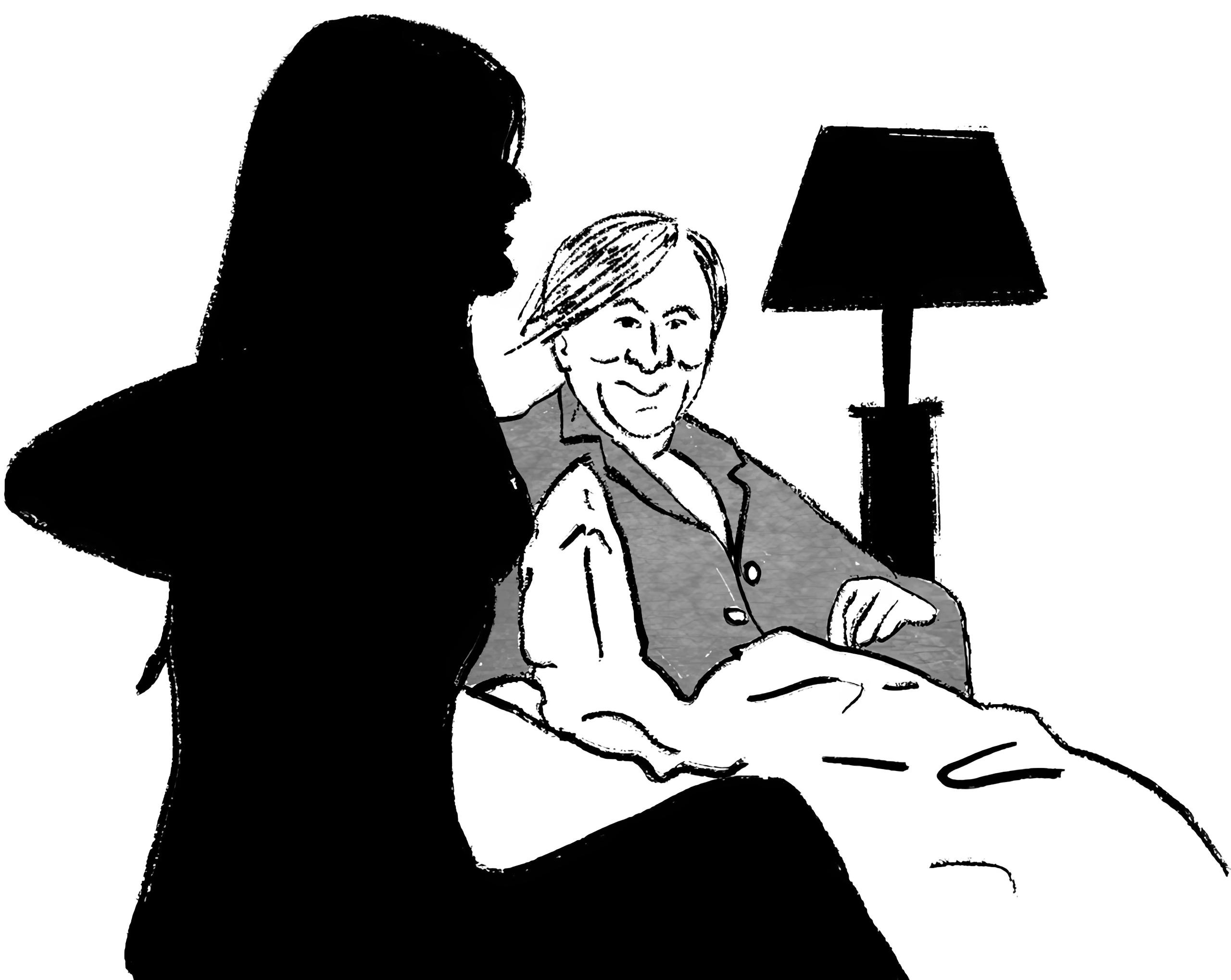
I am sitting in a former public toilet in Spitalfields, rain pelting the pavement overhead. Around a narrow table draped in black velvet, some of Britain’s most notorious criminals – now artists – have gathered to launch their initiative for former inmates, Rogues Gallery. By dint of the weather (and the DIY approach to launch PR), it’s just me, alone in the basement, with the rogues.
To my left is Contra, 64, avuncular and softly spoken – his alias an anagram of ‘con art’, his real name withheld for legal reasons. Beyond him sits Paddy Maguire, wrongly imprisoned in 1976 at the age of fourteen for a series of IRA pub bombings – one of the most egregious miscarriages of justice in British legal history.
To Maguire’s left, facing me, is one of the ringleaders of the 2015 Hatton Garden heist, dripped out in surprisingly fresh black gorpwear. The robbery was notable for the astonishingly advanced age of those involved: the so-called ‘diamond wheezers’ had a combined 448 years between them. Like Contra, his identity has to be fudged; for ease of reading, we’ll call him the Gardener.
Next comes Louis Simpson, a boyish but frazzled veteran of the acid house scene. As a teenager in the 1990s, he shuttled joyfully between Ibiza and Britain, until he was caught carrying 4,000 ecstasy tablets through Barcelona airport and sentenced to four-and-a-half years in the city’s fearsome La Model prison. His colourful abstracts now fill the far wall.
Standing behind us is Kevin Hanley – once labelled by a judge as Britain’s ‘top, top man’ in the drug world and, incidentally, Simpson’s uncle. Before I arrived he told me about the untapped talent he saw inside: how he would visit the Gardener’s ‘peter’ (cell) and marvel at the work. Leaning on my right shoulder is the irrepressibly cockney Ronnie Parry, bankrolling the scheme through his business, Gartree Galleries, itself named after a Category B prison in Market Harborough. Every man here has done time; some met on the street, others on the inside.
Contra, who co-founded Rogues Gallery alongside Parry, opens the discussion. ‘We’d like to be the bridge between the inside and the outside,’ he tells me, ‘so that, having come home, if you’re talented enough, we’ll try and find a space for you.’
The collective hopes to steer ex-offenders away from recidivism through giving their art a platform. They want to get the word out (or rather, in) through Inside Time, the weekly prison paper, and eventually plan to show serving prisoners’ work – culminating, they hope, in an exhibition at the House of Lords. The peer, John Bird, founder of The Big Issue and once a prisoner himself, backs their cause; he spoke here on opening night.
‘We’d like local businesses or the art world to support us,’ Parry sighs, evidently preoccupied with slow sales. ‘Everyone’s saying what a good idea it is, but we need to turn that into reality, where we can actually sell paintings, and galleries will take our artists.’